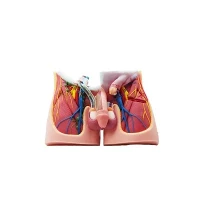
Pathology is a crucial field in medicine that involves the study of diseases through the examination of tissues, organs, and bodily fluids. Pathology departments play a central role in diagnosing diseases, guiding treatment decisions, and conducting research. In recent years, the use of pathology models has emerged as a valuable tool to enhance the efficiency of these departments. As a supplier of Pathology Models, I have witnessed firsthand how these models can revolutionize the way pathology departments operate.
Visualization and Education
One of the primary ways pathology models improve the efficiency of pathology departments is through enhanced visualization and education. Traditional methods of teaching and learning in pathology often rely on textbooks, slides, and lectures. While these resources are valuable, they can sometimes lack the three - dimensional (3D) perspective that is essential for a comprehensive understanding of pathological processes.
Pathology models provide a tangible and realistic representation of diseased tissues and organs. For example, our Pathology Model offers a detailed view of various pathological conditions in the digestive system. These models allow pathologists, medical students, and other healthcare professionals to examine the structure and appearance of diseased tissues from different angles, which can significantly improve their ability to recognize and diagnose diseases.
In a pathology department, new employees or trainees can use these models for hands - on learning. Instead of spending hours poring over two - dimensional slides, they can quickly grasp the key features of a disease by manipulating a 3D model. This not only shortens the learning curve but also improves the accuracy of diagnoses as trainees are better prepared to identify abnormal tissue structures.
Communication and Collaboration
Effective communication and collaboration are vital in a pathology department. Pathologists often need to discuss cases with other medical specialists, such as surgeons, oncologists, and radiologists. However, communicating complex pathological findings can be challenging, especially when relying solely on verbal descriptions or two - dimensional images.
Pathology models serve as a common visual language that can bridge the communication gap between different medical disciplines. For instance, when a pathologist is discussing a digestive system tumor with a surgeon, a Digestive Anatomy Model can be used to show the exact location, size, and extent of the tumor. This visual aid helps the surgeon better understand the pathological situation and plan the surgical approach more effectively.
Moreover, in multi - disciplinary meetings, these models can facilitate more in - depth discussions and decision - making. Team members can gather around a model, point out specific features, and share their insights. This collaborative environment leads to more accurate diagnoses and better treatment plans, ultimately improving patient outcomes.
Quality Control and Standardization
Maintaining high - quality standards is essential in a pathology department. Errors in diagnosis can have serious consequences for patients, so it is crucial to have reliable methods for quality control. Pathology models can play a significant role in this aspect.
Our models are designed to accurately represent the typical features of various diseases. They can be used as reference standards for pathologists to compare their findings during routine examinations. For example, a pathologist can use a Torso Model Digestive System to ensure that they are correctly identifying the location and characteristics of a digestive disease.
In addition, these models can be used for internal audits and proficiency testing. By comparing the diagnoses made by different pathologists using the same model, the department can identify any variations in interpretation and provide targeted training to improve consistency and accuracy.


Research and Development
Pathology departments are also involved in research to better understand the mechanisms of diseases and develop new treatment methods. Pathology models can be valuable tools in this research process.
They can be used to simulate different disease states and study the progression of diseases in a controlled environment. For example, researchers can use models to investigate how a particular treatment affects the structure and function of diseased tissues. This experimental approach can provide insights that are difficult to obtain through traditional research methods.
Furthermore, as new diseases emerge or existing diseases evolve, pathology models can be updated to reflect the latest pathological knowledge. This allows researchers to stay at the forefront of their field and develop more effective diagnostic and treatment strategies.
Cost - Effectiveness
In the long run, using pathology models can be cost - effective for pathology departments. While there is an initial investment in purchasing the models, they can save time and resources in the long term.
As mentioned earlier, these models can reduce the training time for new employees, which means less time spent on training and more time spent on actual patient care. Additionally, by improving the accuracy of diagnoses, they can help avoid unnecessary tests and treatments, which can save both the department and the patients money.
Conclusion
In conclusion, pathology models offer numerous benefits that can significantly improve the efficiency of pathology departments. From enhancing visualization and education to facilitating communication, ensuring quality control, supporting research, and providing cost - effectiveness, these models have become an indispensable tool in modern pathology.
If you are interested in learning more about how our pathology models can benefit your pathology department or would like to discuss a potential purchase, please feel free to reach out. We are committed to providing high - quality pathology models that meet the diverse needs of your department.
References
- Kumar, V., Abbas, A. K., Aster, J. C. (2020). Robbins and Cotran Pathologic Basis of Disease. Elsevier.
- Rubin, R., Strayer, D. S. (2014). Rubin's Pathology: Clinicopathologic Foundations of Medicine. Lippincott Williams & Wilkins.